
Wednesday, March 14, 2007


Tuesday, March 13, 2007
Doing the mash
Yesterday I went to a talk on "mashups". Mashing, in techy speak, is when content from more than one source is combined into an integral experience, so for instance feeding in flickr photos or an rss feed into blogger or another website. Fd's flicker toys, which I'm always blogging about, also "mash" as they use the Flickr API to feed in photos and search flickr to create snazzy photo art or perform other functions.  Flickr seems to be one of the "in" things to mash at the moment and funky little programs are cropping up all over the place. For instance tagnautica is a browser that allows users to explore the huge flickr image collection by using tags as keywords to classify images, meanwhile the retrievr sketching search engine is an impressive gizmo that allows users to search and explore Flickr images by drawing rough sketches.
Mashing creates many possibilites - we can extract certain types of data from a database such as < date > or < location > and create timelines of events or place markers onto a map (see google maps). Mashups, as of today, are mostly a programmer's affair although there are some tools such as MapBuilder that can help you create basic maps without coding. I'm going to give it a shot though, it's very "in" in the world of Web 2.0 (if you believe in that kind of thing Mr Berners Lee).
Further Info
The Programmable Web
Information Aesthetics
 Flickr seems to be one of the "in" things to mash at the moment and funky little programs are cropping up all over the place. For instance tagnautica is a browser that allows users to explore the huge flickr image collection by using tags as keywords to classify images, meanwhile the retrievr sketching search engine is an impressive gizmo that allows users to search and explore Flickr images by drawing rough sketches.
Mashing creates many possibilites - we can extract certain types of data from a database such as < date > or < location > and create timelines of events or place markers onto a map (see google maps). Mashups, as of today, are mostly a programmer's affair although there are some tools such as MapBuilder that can help you create basic maps without coding. I'm going to give it a shot though, it's very "in" in the world of Web 2.0 (if you believe in that kind of thing Mr Berners Lee).
Further Info
The Programmable Web
Information Aesthetics
Monday, March 12, 2007
Wednesday, March 07, 2007

Monday, March 05, 2007
Monday, February 19, 2007
Five ways to save the world
At the moment the media is dominated by the catastrophe that is global warming. Documentaries are aired on TV every week and the Saturday night films have taken on an apocalyptic edge. It has become the no. 1 issue in the press and is front page news most weekends. Slowly but surely the fear of global warming is creeping into the consciousness of every single person in this country and the public are getting real. Driving has become the new smoking; energy saving light bulbs are the in accessory. Even though I’ve always been aware of this phenomena, knew it was a really big deal, even I have been taken a back at the rate that this issue has escalated so quickly in the public domain of late. And rightly so. It is serious. It is something we are going to witness in our life times, and it will be scary. However, despite the media coverage, the political turnings, the increased awareness, can we really rely on the human population to act quickly and strongly enough to reduce the effects of global warming on this planet?
Last night BB2 aired a documentary entitled Five Ways to Save the World in which five scientists said "no" to the above question and proposed five radical ideas that could save the world from global warming. As incredible and mind blowing as some of these ideas may seem these scientists are not cranks – they exist as some of the most revered and respected scientists of our time. Their solutions fall into two categories 1. to reduce the effect of the sun’s rays, and 2. to reduce the amount of carbon dioxide in the atmosphere.
First up in team “Block Sun” we have Professor Roger Angel from Arizona, the designer of the world's largest telescope. He proposes to put a giant glass sunshade in space which will deflect a small percentage of the sun's rays back into space. Giving the planet some sunglasses so to speak. Alongside him we have the winner of the Nobel Prize for chemistry for discovering the causes of the hole in the ozone layer; Dutch Professor Paul Crutzen. Crutzen suggests that we duplicate the effects of volcanic eruptions and create a man-made sulphur screen around the earth by firing hundreds of rockets loaded with tons of sulphur into the stratosphere. Potentially causing some acid rain and more holes in the ozone layer, but never the less effective in reducing temperatures. Also in the “Block Sun” corner we have a rather more environmentally friendly solution. British atmospheric physicist Professor John Latham and engineer Stephen Salter have designed a fleet of remote-controlled yachts. Which would would pump fine particles of sea water into the clouds, increasing the thickness and “shinyness” of the clouds thus reflecting the sun's rays.
Meanwhile, in the “Reduce CO2” team we have Sydney engineer Professor Ian Jones who proposes to feed the plankton that live in the sea with tons of fertiliser. This will make the plankton grow and absorb carbon dioxide from the air. And on a similar note we have New York-based Professor Klaus Lackner who has designed a machine to capture carbon dioxide. His plan is to locate them across the globe where they would suck in carbon dioxide, turning it into a powder. The plan is to then bury the carbon dioxide deep under the ocean in disused oil or gas fields.
Realistic roadmaps or fanciful flights - these ideas are being considered by scientists and governments worldwide who fear that the human race will never be able to unify to reduce carbon dioxide or do enough in the way of renewable energy. I'll continue doing my bit and I'm sure millions of other people will too, but is it getting to the stage where we have to ask ourselves; are we too deep in a post-environmental society to be able to tackel this in an enironmental way? At what point should we accept science as the only realistic solution we have left?
Last night BB2 aired a documentary entitled Five Ways to Save the World in which five scientists said "no" to the above question and proposed five radical ideas that could save the world from global warming. As incredible and mind blowing as some of these ideas may seem these scientists are not cranks – they exist as some of the most revered and respected scientists of our time. Their solutions fall into two categories 1. to reduce the effect of the sun’s rays, and 2. to reduce the amount of carbon dioxide in the atmosphere.
First up in team “Block Sun” we have Professor Roger Angel from Arizona, the designer
 of the world's largest telescope. He proposes to put a giant glass sunshade in space which will deflect a small percentage of the sun's rays back into space. Giving the planet some sunglasses so to speak. Alongside him we have the winner of the Nobel Prize for chemistry for discovering the causes of the hole in the ozone layer; Dutch Professor Paul Crutzen. Crutzen suggests that we duplicate the effects of volcanic eruptions and create a man-made sulphur screen around the earth by firing hundreds of rockets loaded with tons of sulphur into the stratosphere. Potentially causing some acid rain and more holes in the ozone layer, but never the less effective in reducing temperatures. Also in the “Block Sun” corner we have a rather more environmentally friendly solution. British atmospheric physicist Professor John Latham and engineer Stephen Salter have designed a fleet of remote-controlled yachts. Which would would pump fine particles of sea water into the clouds, increasing the thickness and “shinyness” of the clouds thus reflecting the sun's rays.
Meanwhile, in the “Reduce CO2” team we have Sydney engineer Professor Ian Jones who proposes to feed the plankton that live in the sea with tons of fertiliser. This will make the plankton grow
 and absorb carbon dioxide from the air. And on a similar note we have New York-based Professor Klaus Lackner who has designed a machine to capture carbon dioxide. His plan is to locate them across the globe where they would suck in carbon dioxide, turning it into a powder. The plan is to then bury the carbon dioxide deep under the ocean in disused oil or gas fields.
Realistic roadmaps or fanciful flights - these ideas are being considered by scientists and governments worldwide who fear that the human race will never be able to unify to reduce carbon dioxide or do enough in the way of renewable energy. I'll continue doing my bit and I'm sure millions of other people will too, but is it getting to the stage where we have to ask ourselves; are we too deep in a post-environmental society to be able to tackel this in an enironmental way? At what point should we accept science as the only realistic solution we have left?
Saturday, February 17, 2007
Me and Myself

Narcissistic moment and been playing with photoshop again, it's too addictive! The colour version is here - couldn't decide which worked best!
Friday, February 16, 2007
Spring has sprung
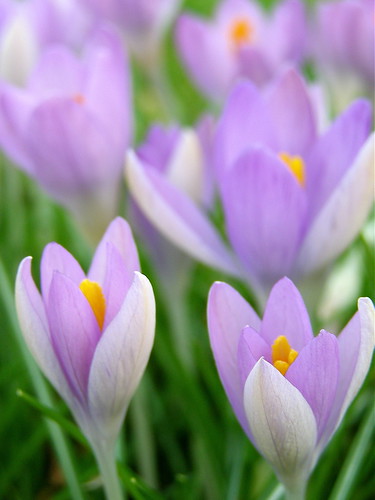
After missing out on the photo opportunity afforded to me by all that wonderful snow last week at least I manged to have my camera returned to me in time to catch the first flowers of spring. This photo was taken yesterday in the Oxford University Parks.
Friday, February 09, 2007
Let it snow
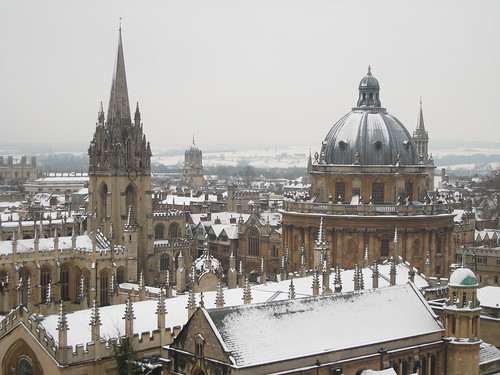 Yesterday it snowed in Oxford. Actually it snowed quite a lot. People were snowed in and couldn't get to work, all the state schools were shut, the traffic disappeared. Oxford city became littered with snowmen, the college buildings adorned a fluffy coat, snowballs flew through the air whilst from the walls of Exeter and Brasenose colleges students engaged in a full scale snow battle. Everyone went out to play, flopping onto the floor to make snow angels, skidding down hills, making footprints, laughing, joking, and giggling like children. Wondering down to Port Meadow we were met with a sea of whiteness, breathtakingly beautiful, a snow lovers paradise. Oxford suits the snow, it turns into a fairytale.
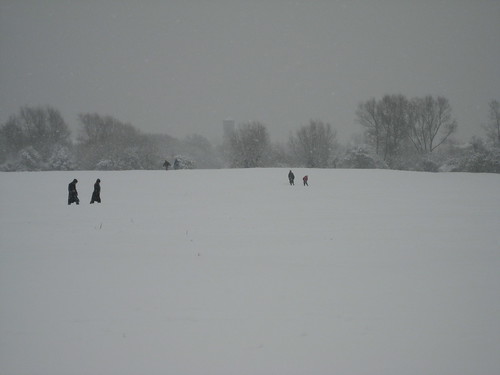 I am still kicking myself for leaving my camera in Birmingham last weekend so I have no photographs of yesterday and now the snow is turning to slush. I took some pictures with a mobile phone and will see how those turn out once transfered onto a computer, but I'm not holding my breath. Luckily the flickr community has provided more that enough momentos of yesterday's winter wonderland for me to blog!
Pictures from: Lawrence OP, The Ewan, Spigoo, Hyperplane28 and Daveybot
Subscribe to:
Posts (Atom)


 Posts
Posts

